
Understand Forex Liquidity with our Prop Firm Increase Your Trading Success Today
18 de agosto de 2022 by admin
The different business models and capabilities of these liquidity providers allow them to serve the market in different ways. Core liquidity providers are typically institutions or banks that underwrite or finance equity or debt transactions and then make a market or assist in the trading of the securities. The majority of Forex brokers (more than 90%) do not have access to the liquidity of Tier 1 and specified exchanges because Tier 1 providers work only with large volumes. Therefore, there are smaller providers of liquidity of Tier 2, who act as intermediaries between brokers and Tier 1 institutions. Among this category’s liquidity providers are LMAX Exchange, Currenex, Integral, CFH Clearing, Hotspot FX, Refinitiv FXall, FXCM Pro, and Swissquote. To understand who a Forex liquidity provider is, you need to be aware of what liquidity is.
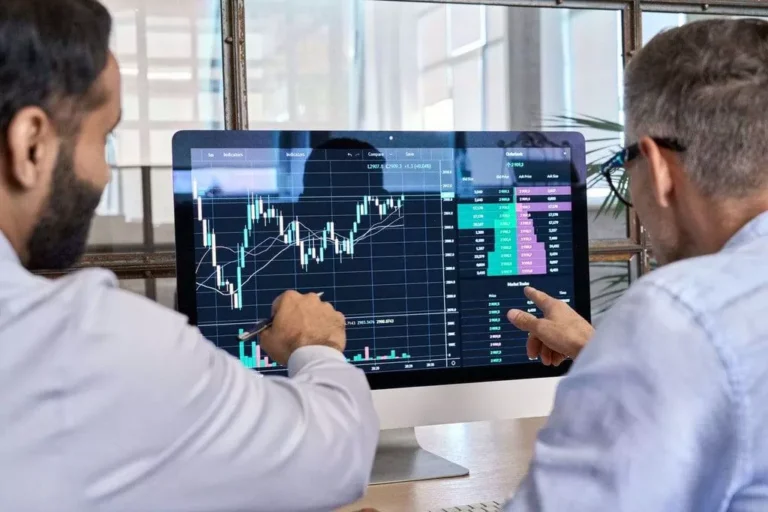
These services can be particularly useful for new traders who are just starting out in the forex market. ECNs are electronic systems that connect buyers and sellers directly without the need for a middleman. They provide access to a deep pool of liquidity from multiple liquidity providers, including banks and other financial institutions. There are different types of liquidity providers, including market makers, electronic communication networks (ECNs), and banks. Each type of liquidity provider has its advantages and disadvantages, and traders must choose the one that best suits their trading needs. And this is one of the factors of the broker’s liquidity providers’ estimation.
The Most Liquid Currency Pairs
In this section, we will delve into the important role liquidity providers play in the forex market and how they contribute to the overall stability and functionality of the market. Electronic trading platforms have made it easier for liquidity providers to offer prices to a wider range of market participants. This has increased competition among liquidity providers, which has led to tighter bid-ask spreads and better execution for traders. Market makers are liquidity providers that create a market for forex traders by buying and selling currencies at any time. They provide liquidity by quoting both a buy and a sell price for a currency pair, and traders can buy or sell at these prices. Market makers earn profits by charging a spread, which is the difference between the buy and sell price.
Without liquidity providers, the forex market would be much more volatile, and it would be much more difficult for traders to enter and exit trades at the prices they want. Liquidity providers play a crucial role in the forex market, ensuring the smooth functioning of currency trading. These entities, which can include banks, financial institutions, and market makers, act as intermediaries between buyers and sellers, facilitating the execution of trades and maintaining liquidity in the market. In this section, we will delve deeper into the role of liquidity providers in the forex market and highlight their importance for RUB forex traders.
This is done by placing numerous limit orders in the order book, thereby maintaining the balance of the market in case a large volume of any financial instrument is bought and sold. Increased liquidity reduces the spread (which is expressed as a dissimilarity between the last buy price and the last sell price), as well as trading costs, positively affecting trading on the financial market. We hope this goes without saying, but unless you are a huge bank and have your own liquidity reserve, you will have to think about what method of aggregation you want to use. Without a liquidity provider, an ordinary Forex broker would not be able to satisfy all of their clients’ orders, meaning that it will not be viable in the long term perspective. Providing a centralized platform for trade execution limits the potential negative impacts of market volatility. Short-term traders may find this especially advantageous for capitalizing on market fluctuations to maximize profits.
It is not an exaggeration to say that the world depends on LP institutions to function smoothly and provide much-needed financial support wherever necessary. This hugely demanded market makes countless deals happen daily and paves the way for economic prosperity. However, even such a necessary part of the world economy can face huge volatility risks and cause severe problems across many countries.
Improved Market Liquidity
The introduction of technology has simplified volatility analysis, but it is not a perfect science, and managing price changes without significant losses remains the biggest challenge in the forex industry. Liquidity providers serve as the foundation for stable economies across the globe and therefore bear a significant responsibility to keep things stable for the benefit of all parties involved. From increased freedom to trade stocks and currencies to tighter spreads and 24/7 market availability, the forex market has become much more accessible to smaller and beginner traders worldwide.
Due to the enormity of the forex market, which currently experiences daily transaction volumes in excess of six billion U.S. Dollars per business day, foreign exchange market liquidity has no equal in any other capital market anywhere in the world in terms of liquidity available to traders in the major currency pairs. As intermediaries, liquidity providers facilitate trade execution by matching buyers and sellers in the market.
How Do Liquidity Providers Work?
As of 2023, the forex market has become the largest financial market in the world, amounting to a staggering daily turnover of $7.6 trillion. The overall value of this juggernaut industry is even more impressive, stacking up to $1.93 quadrillion. Let us discuss how LPs have managed to cement themselves as the quintessential players in the financial market. This currency pair typically has an average daily turnover of 400 billion USD. Spreads in the “Swissy” as the currency pair is known are typically 2.5 to 5 pips wide. Market makers are generally compensated by the differential between the bid rate and the ask rate that is typically known as the dealing spread.
Ideally, the core liquidity provider brings greater price stability to the markets, enabling securities to be distributed on demand to both retail and institutional investors. Without liquidity providers, the liquidity or availability of any given security could not be guaranteed, and the ability of buyers and sellers to buy or sell at any given time would be diminished. The presence of multiple liquidity providers competing for trades leads to tighter bid/ask spreads.

As a trader, it’s important to do your research and choose a liquidity provider that meets your specific needs. Since currencies are the lifeblood of all dealings across the globe, there are a multitude of factors that can easily influence the equilibrium and present potential loss scenarios to the liquidity providers. Here the name quite literally speaks for itself – market makers represent third parties in the world of forex forex broker liquidity provider that purchase and sell on the foreign currency market at their own set prices. Market makers use their significant funds to accelerate the flow of forex transactions and narrow the gap between sellers and buyers. Trading in the above currency pairs, which are the most traded forex instruments in the world, usually presents the active trader with the best opportunity to make profitable transactions due to low transaction costs.
ECNs are digital platforms that match buy and sell orders for currency pairs. They connect traders directly to the interbank market, where they can access the best prices available. Market makers, on the other hand, create a market for currency pairs by offering buy and sell quotes. They are called market makers because they make a market for a given currency pair. One of the primary responsibilities of liquidity providers is to ensure there is continuous liquidity in the forex market. They achieve this by constantly quoting bid and ask prices for various currency pairs, effectively creating a two-way market.
- The list of major liquidity providers includes international financial exchanges for trading futures, options, and other financial instruments.
- Since we have defined the concept of a market maker above, let us discuss the most prevalent example in this domain – Large Banks that dictate the price of currencies worldwide.
- There are a lot of providers out there, and not all of them are created equal.
- The emergence of electronic trading systems made possible the creation of global trading floors, the largest of which today is the Forex market.
Liquidity providers contribute to this by offering tight spreads, allowing traders to benefit from more favorable trading conditions. Participants of such trading floors are usually different economic entities geographically located at any point globally. Thanks to such financial institutions, today’s Forex market is the most liquid and has a daily turnover of trillions of dollars. On the other hand, trading transactions are also simplified, the volume of available liquidity increases and opportunities for capital investment are expanded.
LPs play a vital role in ensuring that the forex market is liquid, which is essential for traders to make profits and grow their trading accounts. There are different types of liquidity providers, https://www.xcritical.com/ including banks, electronic communication networks (ECNs), and market makers. Banks are the largest liquidity providers, and they offer quotes to other banks or financial institutions.
Liquidity providers take out a substantial amount of risk and in doing so can be handsomely rewarded because they can see the order flow. The Forex market is the single largest market in the world not just in terms of average daily turnover and average revenue per trader but also the largest market in terms of participants. Naturally, even these state-of-the-art tools fail to paint a perfect picture of the forex market.
Liquidity providers are financial institutions or individuals who offer liquidity to the market by buying and selling assets. Liquidity providers can be banks, other financial institutions, or individual traders. The top liquidity providers in the foreign exchange market are known as “Tier 1” liquidity providers. Banks with large balance sheets can accommodate sizable transactions, enabling them to make markets for various financial assets. For example, the world’s largest banks are core liquidity providers in the foreign exchange markets.